
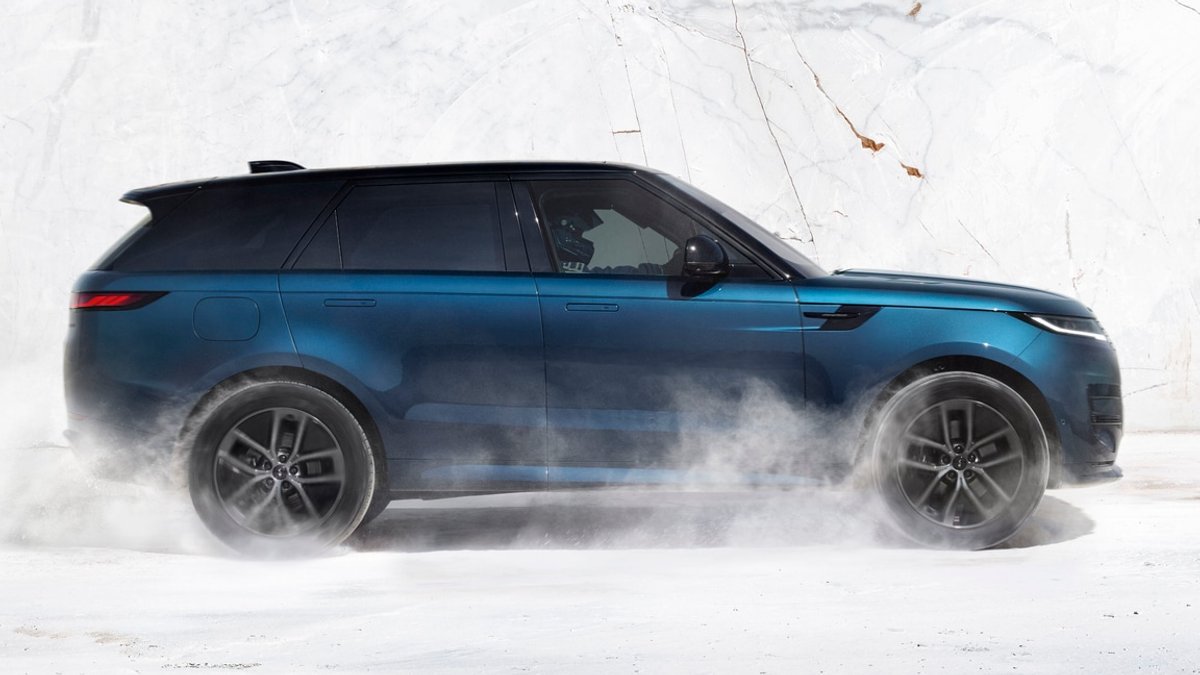
The Range Rover Sport Electric faces a tougher challenge than its larger sibling, the Range Rover Electric. While the full-size model operates in a near-empty electric luxury SUV segment, the Sport must compete against a growing field of rivals set to arrive in the coming years. The two vehicles share the same core technology but deliver distinct driving experiences.
Both models use the same 550-horsepower dual-motor setup, paired with an 118.5-kWh battery and an 800-volt charging system, allowing them to recharge from 10% to 80% in 22 minutes at peak speeds. The Sport, however, offers a slight edge in range, 374 miles under WLTP testing, compared to the full-size Range Rover’s 372 miles.
The Range Rover Electric has dropped its active anti-roll bar system in favor of a lower center of gravity from the battery placement. The Sport retains this feature, along with twin-chamber air springs, adaptive dampers, four-wheel steering, and lateral torque vectoring. These systems work together to adjust the vehicle’s handling dynamically, depending on the selected drive mode or road conditions. On test tracks, the Sport feels more composed and stable, even in standard mode, while dynamic mode sharpens its response without sacrificing comfort.
A key difference lies in the powertrain tuning. The Sport includes adjustments to cooling for more sustained high-speed driving. Regenerative braking is controlled via the touchscreen, no paddle shifters, but an “S” mode on the gear selector introduces extra regeneration and disc brake engagement for smoother stops.
The Range Rover Sport Electric will go up against established and upcoming rivals like the Porsche Cayenne S Electric (666 hp, 405 miles), BMW iX5 60 xDrive (578 hp, 525 miles), Mercedes-AMG EQE SUV 53 (625 hp, 279 miles), and the Cadillac Lyriq-V (646 hp, 294 miles).
The Sport’s £110,000 price tag positions it as the more accessible option within the Range Rover lineup, though it remains far from affordable.


