Turbocharged engines have become common across everything from compact hatchbacks and family SUVs to performance sedans and sports cars.
A turbocharger can help an engine produce more power from a relatively small displacement, but that extra performance depends on careful control of boost pressure.
One of the most important components responsible for that control is the turbo wastegate. Although it is relatively small compared with the turbocharger assembly, it plays a major role in regulating exhaust flow, protecting engine components, and maintaining predictable performance.
What a Turbo Wastegate Actually Does
A turbocharger uses exhaust gases leaving the engine to spin a turbine. That turbine is connected by a shaft to a compressor wheel, which forces additional air into the intake system.
More air allows the engine management system to add the appropriate amount of fuel, helping the engine generate additional torque and horsepower.
However, the turbocharger cannot simply keep increasing pressure without control. Excessive boost could place unnecessary stress on components such as the pistons, cylinder head, intercooler, intake manifold, and turbocharger itself.
The wastegate provides the necessary regulation.
Controlling Exhaust Flow Around the Turbine
The wastegate works by controlling how much exhaust gas passes through the turbocharger turbine.
When boost pressure is below the target level, the wastegate generally remains closed. This directs more exhaust energy through the turbine, allowing the turbocharger to spool and build pressure.
As the required boost level is reached, the wastegate begins to open. Part of the exhaust flow is then redirected around the turbine instead of passing through it.
Internal and External Wastegate Designs
Automotive turbo systems generally use either an internal or external wastegate. Both perform the same basic task, but their construction and installation differ.
Internal Wastegates
An internal wastegate is integrated into the turbocharger housing. It normally consists of a small flap, an actuator, and a linkage mechanism.
This design is widely used in production vehicles because it is compact and can provide reliable boost regulation for everyday road cars.
External Wastegates
An external wastegate is installed separately from the turbocharger. These units are often found in specialized high-performance or heavily modified vehicles where greater control over exhaust flow may be required.
For most factory turbocharged cars, however, internal wastegate systems are more common.
How the Wastegate Actuator Controls Boost
The wastegate flap does not operate by itself. An actuator controls when and how far it opens.
Depending on the vehicle, the system may use a pneumatic, vacuum-controlled, or electronic actuator. Modern engines increasingly rely on sophisticated electronic boost-control strategies that allow the ECU to adjust turbo operation according to engine speed, throttle position, load, temperature, and other sensor data.
This means the boost pressure can change continuously while the vehicle is being driven.
For example, strong acceleration may require a bigger boost, while light cruising requires much less. The wastegate helps the drivetrain deliver power smoothly rather than allowing the turbocharger to operate at maximum pressure continuously.
Why Wastegate Condition Matters to Turbo Performance
Like many mechanical components exposed to heat and vibration, wastegate parts can gradually wear.
Bushings, actuator rods, diaphragms, linkages, seals, and the wastegate flap itself may eventually require inspection or servicing. Play within the mechanism can affect how accurately the flap opens and closes.
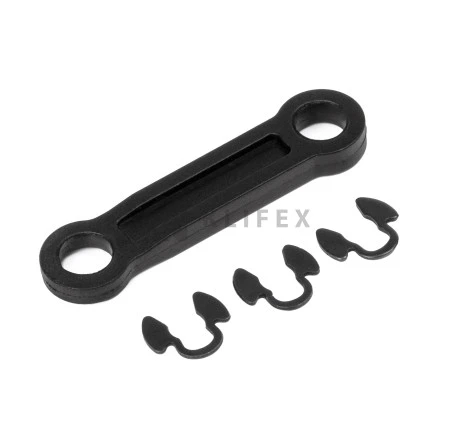
Instead of automatically replacing an entire turbocharger assembly, experienced technicians may first inspect whether individual wastegate components can be repaired. Car owners researching this type of maintenance may encounter westgate repair kits, which contain components designed for specific turbocharger applications.
Correct diagnosis remains important because symptoms associated with boost control can also originate elsewhere in the intake, exhaust, vacuum, or electronic engine-management systems.
Common Signs of Wastegate-Related Problems
A properly functioning wastegate should operate without drawing much attention from the driver.
When its operation changes, however, several symptoms may appear:
- Inconsistent turbo boost.
- Reduced acceleration.
- Unusual turbocharger noises.
- Irregular power delivery.
- Engine warning lights.
- Boost-pressure fault codes.
- Changes in fuel efficiency.
Choosing the Correct Repair Components
Wastegate components are not universally interchangeable. Turbochargers vary according to engine family, vehicle manufacturer, displacement, model year, and turbo specification.
For that reason, buyers should identify the exact turbocharger or OEM reference before purchasing replacement parts. Specialist automotive suppliers such as the Klifex shop organize repair components around particular applications, helping vehicle owners and technicians match parts with the appropriate turbo system.
Using application-specific components is especially important because even small differences in actuator travel or wastegate geometry can influence boost-control behavior.
Keeping Turbo Boost Predictable
The turbo wastegate is a good example of how a relatively small automotive component can influence the behaviour of an entire engine.
By regulating exhaust flow through the turbine, it helps the turbocharger build useful boost without exceeding the pressure requested by the engine-management system. Together with sensors, actuators, the ECU, intercooler, intake system, and exhaust system, the wastegate contributes to smooth acceleration and controlled turbo performance.
For car owners and enthusiasts, understanding how this component works also makes turbocharger diagnosis easier. When boost performance begins to change, checking the wastegate and its related hardware can be an important part of identifying the real cause before deciding which components need repair or replacement.


