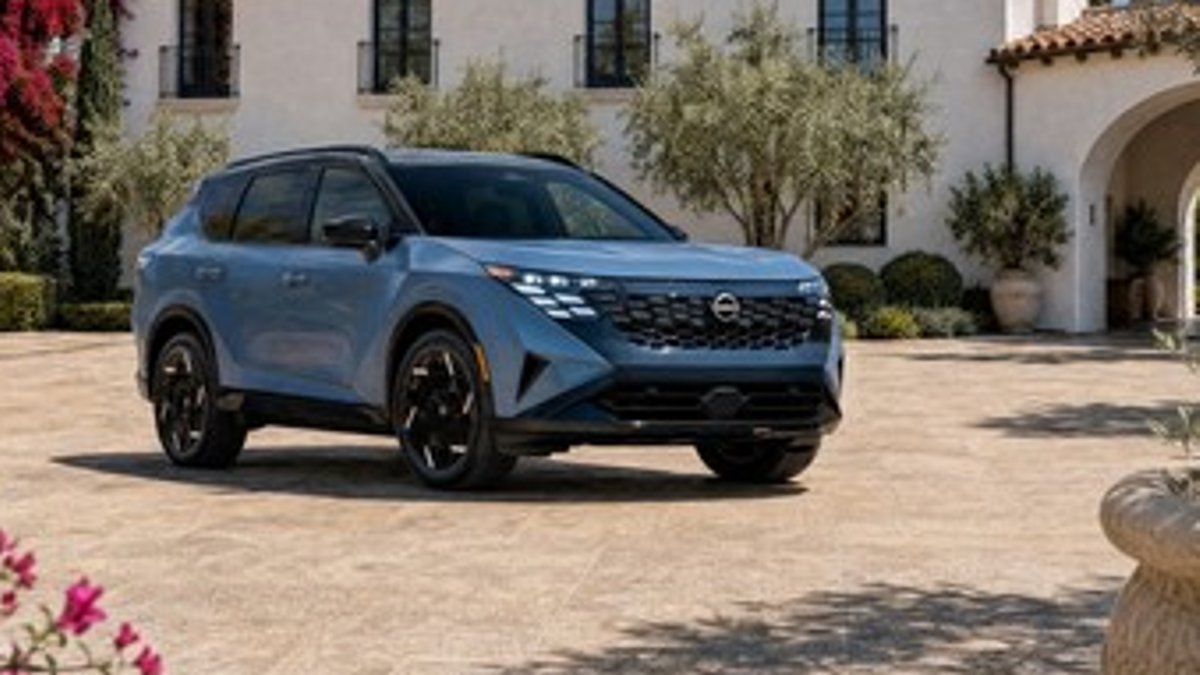
The 2027 Nissan Rogue e-Power Hybrid stands out as the most significant vehicle Nissan Canada will introduce this year, and potentially the most important since the turn of the millennium. The automaker has been absent from the partially-electrified market in North America for about 15 years, following the 2015 exit of the Altima Hybrid. This gap coincided with a broader shift toward fully electric vehicles, a segment where Nissan’s market standing in Canada has reportedly suffered. With the new Rogue, the company returns with a unique proposition that aims to reclaim lost ground against competitors.
A series hybrid approach
The e-Power system functions as a series hybrid, a configuration where only the twin electric motors drive the wheels. The new 1.5-liter Turbo three-cylinder gas engine serves solely as a generator for the 1.67-kilowatt-hour lithium-ion battery. It never sends power directly to the wheels. This design contrasts with parallel hybrids, such as the Toyota RAV4, which can use either the gas engine or electric motor alone, or a combination of both, depending on driving conditions.
The technical difference translates to a driving experience that feels electric. The Rogue produces 225 horsepower, a segment average, yet it accelerates quickly from a standstill. The vehicle can reach 100 kilometers per hour in under seven seconds. Throttle response is immediate, and the car feels lively even at high speeds. While it does not match the performance of a supercar, it outperforms many 225-horsepower hybrids the reviewer has driven.
A significant advantage of the series hybrid architecture is the reduction in noise, vibration, and harshness. The electric motors are the only components powering the wheels, so throttle application only indirectly involves the gas engine. The three-cylinder unit operates at a steady, low speed as a generator, which minimizes engine noise. The car is nearly silent at low speeds and completely drowned out by wind noise on the highway.
Nissan engineers have implemented several measures to enhance the cabin’s quietness. The entire powertrain is built into a compact, rigid unit to contain noise and vibration. The three-cylinder turbo is tuned for torque, meaning it rarely needs to rev high. The car also uses acoustic sensors to prioritize engine usage when ambient noise is high and minimize it when it is quiet.
The reviewer spent the first half hour of testing attempting to identify when the gas engine would operate but eventually gave up. In its worst-case scenario, the noise is a murmur. This silence offers a distinct advantage over the more fuel-efficient competition, though it comes with a trade-off in efficiency.
According to Natural Resources Canada, the base version of the e-Powered Rogue averages 6.2 liters for every 100 kilometers traveled. This figure matches the fuel consumption of the Toyota RAV4 Woodland model but is higher than most other RAV4s, which average about 0.5 L/100 km less. The difference in fuel costs amounts to approximately $15 a month at the pumps, with an increase of about 15 grams of CO2 per kilometer. The reviewer notes that while series hybrids like this one are not quite as fuel efficient as the class-leading parallel hybrids, they offer a quieter ride.
The cabin offers more legroom and headroom than many rivals, with up to 65.9 cubic feet of cargo space behind the front seats. The Zero Gravity bucket seats are comfortable and feature climate control with quieter fan systems.
Pricing and final verdict
Pricing also positions the Rogue competitively against its rivals. The base model starts at $39,998, which is more than a few thousand dollars cheaper than equivalent Honda CR-V Hybrids. Nissan Canada states the Rogue Hybrid, from the SV trim to the Platinum model, is between $1,300 and $2,000 cheaper than similarly equipped RAV4s. The only direct competition the Nissan does not match is the base RAV4 LE, which has an MSRP of $37,500.
The company will continue to sell the internal combustion version of the Rogue as a price leader, noting it sells approximately 40,000 of those models annually. The e-Powered Rogue is the first vehicle in quite some time that might offer Toyota’s RAV4 Hybrid serious competition. The former offers a unique, and largely mute, powertrain while the latter is a little more fuel efficient.


