
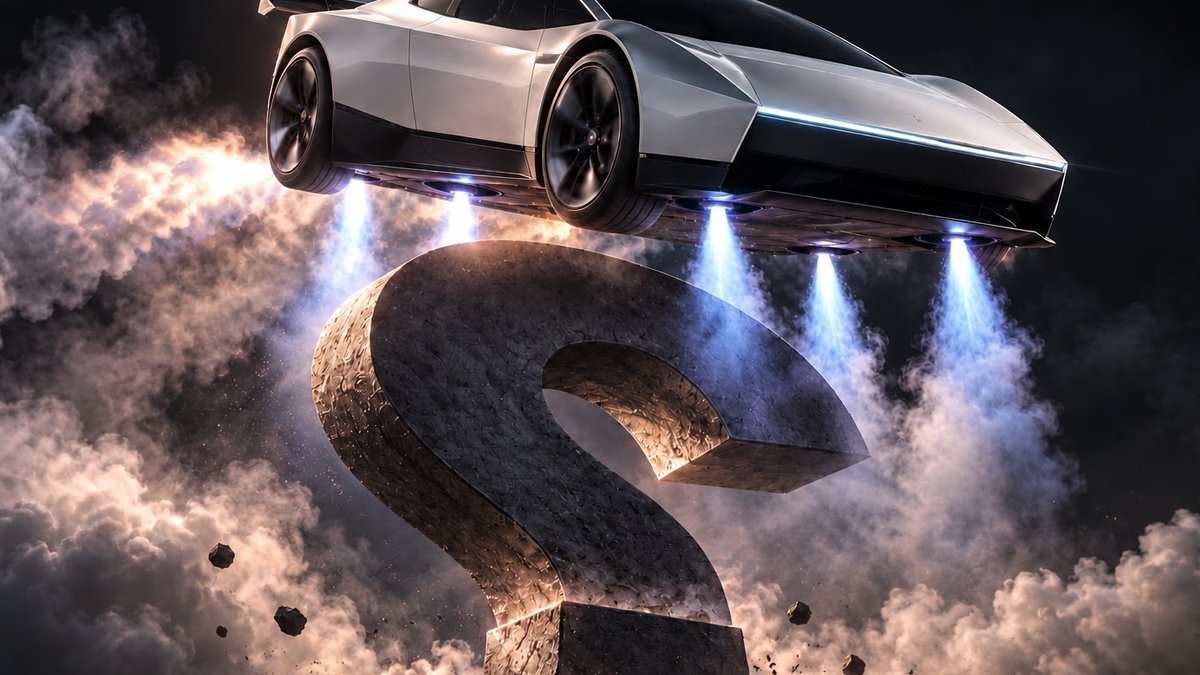
Tesla has finally unveiled the Roadster, nine years after first announcing it would build a successor to the original model. The event took place inside a SpaceX hangar in Texas, where Tesla pulled back the velvet curtain on the long-awaited vehicle. Elon Musk has a history of making wildly outlandish claims, and he did not disappoint this time, promising rockets and a ground effect fan system.
A Return to Rear-Wheel Drive
The new Roadster is rear-wheel drive, a surprising shift for a company known for all-wheel-drive setups. Tesla’s Vice President of Vehicle Engineering, Lars Moravy, explained that the team wanted a “visceral, emotional driver’s car” with massive torque pushing from behind. Two ultra-dense electric motors are packed into the rear axle, putting out over 1000kW and 1400Nm of torque. This means the rear wheels deliver more power than all three motors combined in a Model S Plaid.
Instead of a traditional mechanical differential, power flows through a planetary gear set with an 8.4 reduction ratio. Independent motor inverters control how much power each rear wheel receives in real time. High-performance electric cars often struggle with weight and overheating during track driving, but Tesla tackled both problems by developing a custom 4680 battery cell.
Typical cells are housed in steel cans, but the Roadster uses aluminium casings that transfer heat faster. A double-sided cooling jacket flushes liquid coolant through the pack in a single pass. The pack also features a tailor-welded titanium upper plate and an aluminium lower plate. Powered by an 800-volt architecture, the car can charge from 15 percent to 80 percent in 10 minutes, giving drivers 25 to 30 minutes of continuous track time. Moravy says the total vehicle weight is just under 1700 kilograms.
The Roadster’s carbon-fibre bodywork is packed with active aerodynamic tricks. Up front, high-beam lights pop down from ultra-thin 15-millimetre modules. Active vents and hidden barge boards pop outward to redirect airflow. Inside the front nose, internal wings can pivot up to 80 degrees. At the back, a massive rear wing transforms the profile to create up to 2Gs of downforce at speeds over 320km/h. To move against thousands of newtons of aerodynamic force, Tesla borrowed heavy-duty leg actuators from its Optimus humanoid robot program.
Ground Effect Fans and Cold Gas Thrusters
Tesla debuted a ground-effect fan suction system, similar to systems in the T.50 or Brabham BT46B F1 car. Four high-voltage fans are mounted underneath the car. When activated, rubber skirts drop down to seal the underbody against the road. The fans pull air out, creating a vacuum that clamps the chassis to the ground, providing over 2Gs of cornering grip at speeds under 80km/h. At 320km/h, the skirts open to let the fans blow air out the back like an active diffuser.
The Roadster is being offered in three variants: Performance, Thrust, and Rocket. The Performance model uses the dual-motor rear-wheel-drive powertrain and the fan system but has no rockets. It still hits 0 to 60mph in 1.6 seconds with a top speed of 340km/h. The rockets come with the Thrust and Rocket models. They are case cold gas thrusters that operate on pure pneumatic pressure using compressed nitrogen gas stored at 10,000 PSI inside a carbon-overwrapped pressure vessel.
The Thrust model uses a 200-litre COPV for acceleration. Working with the electric motors and vacuum fans, it launches from 0 to 60 mph in 0.85 seconds. The Rocket model adds a massive 400-litre secondary tank in place of the passenger seat, expanding capacity to 600 litres. It also adds six extra thrusters under the car, bringing the total to ten, with jets on all four corners for pitch and roll control. The combined thrust allows the car to perform short levitation manoeuvres and mid-air directional control.
Because cold gas propulsion relies on mechanical gas expansion, usable thrust follows a balloon-like pressure curve. The system delivers maximum force at initial discharge and tapers off as pressure drops. This results in short, burst-like windows of thrust rather than continuous power. The demonstration cars used pure nitrogen, with the Rocket model taking between 6 and 7 hours to refill for 5 to 10 seconds of thrust. Moravy stated that engineers are developing a rapid compressor system to cut refill times down to around 30 minutes.
While Musk made a sweeping statement that the thrusters ran on “air” and that the car could recharge its own tank, the reality is somewhat more grounded. Extracting nitrogen from air would require an immense amount of electricity and a Pressure Swing Absorption system, making it infeasible in a car. An onboard compressor would work with the thrusters but would introduce moisture that could flash freeze the nozzles. The practical implications of such a system for customers remain unclear.
Design and Technical Specifications
Designed by Franz von Holzhausen, the vehicle features sharp white panels and aerospace-inspired lines. It shares a visual language with the 60s and 70s wedge-shaped supercars that influenced the Cybertruck, but looks far more at home here. The headlights do not pop up.
Design and Interior Details
The Roadster’s exterior draws heavy inspiration from 1960s wedge designs. Franz von Holzhausen led the design team, creating a shape that echoes the Lamborghini Countach. The styling also references the white submersible Lotus Esprit from the James Bond film. Elon Musk personally owns that specific vehicle, which influenced the Cybertruck and now this car. The body uses sharp white panels and aerospace-inspired lines to create a distinctive profile.


