
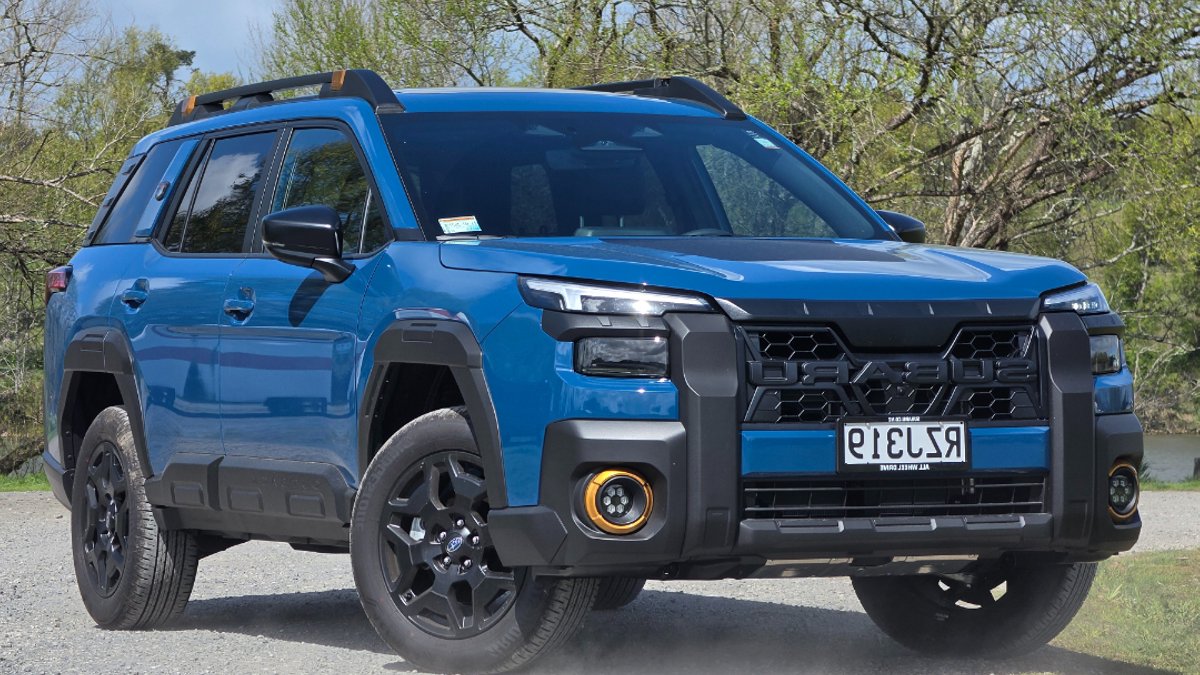
Subaru’s Wilderness specification has finally arrived in New Zealand, bringing a more rugged flavor to the brand’s crossovers. The Wilderness specification was created by Subaru of America and features a raised ride height and extra styling addenda. In the US, the Crosstrek, Forester, and Outback are available in Wilderness specification, but in New Zealand, only the Outback is available in this spec, with two versions: the $69,990 Wilderness and the $74,990 Wilderness Apex.
The Wilderness Apex adds some comfort and convenience features, including sat-nav, power sunroof, and a 12-speaker Harman Kardon audio system. The exterior design features a different front bumper and grille, matte black alloys, and prominent “Wilderness” badges. The Geyser Blue color is exclusive to the Wilderness, and the regular Outbacks get their own Sapphire Blue Pearl color.
Design and Features
The Wilderness has a unique design inside and out, with pop-of-color trim details, bright stitching, and embossed “Wilderness” logos on the headrests. The digital instruments and infotainment screen also have an outdoorsy theme. The Apex brings back some of the luxury gear missing from the entry-level Wilderness, including Vision Assist+ with Front View Monitor, Side View, and a 360-degree camera.
The instrument/infotainment cluster has a wave-like design that works well, and Subaru has stepped back on the digital controls, with physical buttons for the climate control. The Outback is also one of the few cars with an obvious portal to the trip computer and a shortcut button on the steering wheel. Any Outback is a super-practical SUV.
Related Post: How a Turbo Wastegate Keeps Boost Pressure Under Control
The Wilderness has wireless Android Auto and Apple CarPlay, with 1x USB-A and 1x USB-C front and rear. The boot mat is chunky and Wilderness-branded, and the contractible cargo cover attaches magnetically and can be folded and stored in the apron trim pocket. The Outback is a super-practical SUV, and the Wilderness adds to its capabilities with its raised ride height and dual-exhaust pipes.
On the Road
The Wilderness gets a more powerful turbocharged 2.4-litre engine, with 194kW and 382Nm of torque. The continuously variable transmission takes the edge off the extra power, and while there are paddle-shifters to simulate gearchanges, the effect is unconvincing. The Outback’s ride and handling balance are still composed, but the extra height and strength of the underpinnings come with some opportunity cost, making it less smooth on-road than the standard Outback.
The Wilderness does not disappoint in its ability to soak up Kiwi country roads in a safe and engaging way, but it’s not as well-sorted on-road as the standard Outback. The turbo-petrol engine is a 4-cylinder horizontally opposed unit, and the vehicle warranty is 3 years/100,000km, with servicing required every 12 months/15,000km. The rated fuel economy is 10.8l/100km under the NZ 3P-WLTP protocol, and the Outback carries a 5-star NZ VSRR rating, although it’s yet to be tested by ANCAP.
As for safety features, the Outback has dual front and side, far-side, and side curtain airbags, as well as rear cross traffic alert and braking. The Vision Assist+ system includes a 360-degree camera, front and side-view monitors, and other features to enhance safety and convenience. The Outback’s main AWD rivals include the Subaru Trailseeker Touring, Toyota RAV4 Adventure, Nissan X-Trail Rock Creek e-Power, and GWM Haval H7 Vanta PHEV AWD, among others.
Read Also: New Zealand insurer Provident emerges with 250,000 customers
The Wilderness specification is likely to appeal to Outback buyers who want to head off-tarmac and get stuck into some outdoorsy activities. However, for those who don’t plan to venture off-road, the standard Outback may still be the better choice, as it offers a smoother ride and more comfort features. The Wilderness Apex, with its added luxury gear, may be the best option for those who want the best of both worlds. The Subaru Outback Wilderness Apex has a price premium of $5,000 over the flagship standard Outback, the Touring, and it remains to be seen whether this premium is justified by the added features and capabilities.
The GWM Haval H7 Vanta PHEV AWD is another competitor, essentially a more rugged version of the H6. These vehicles offer a range of features and capabilities, making them worth considering for those in the market for an AWD vehicle.
Comparison to Other Vehicles
This is comparable to some of its rivals, although others may offer more efficient options.


