
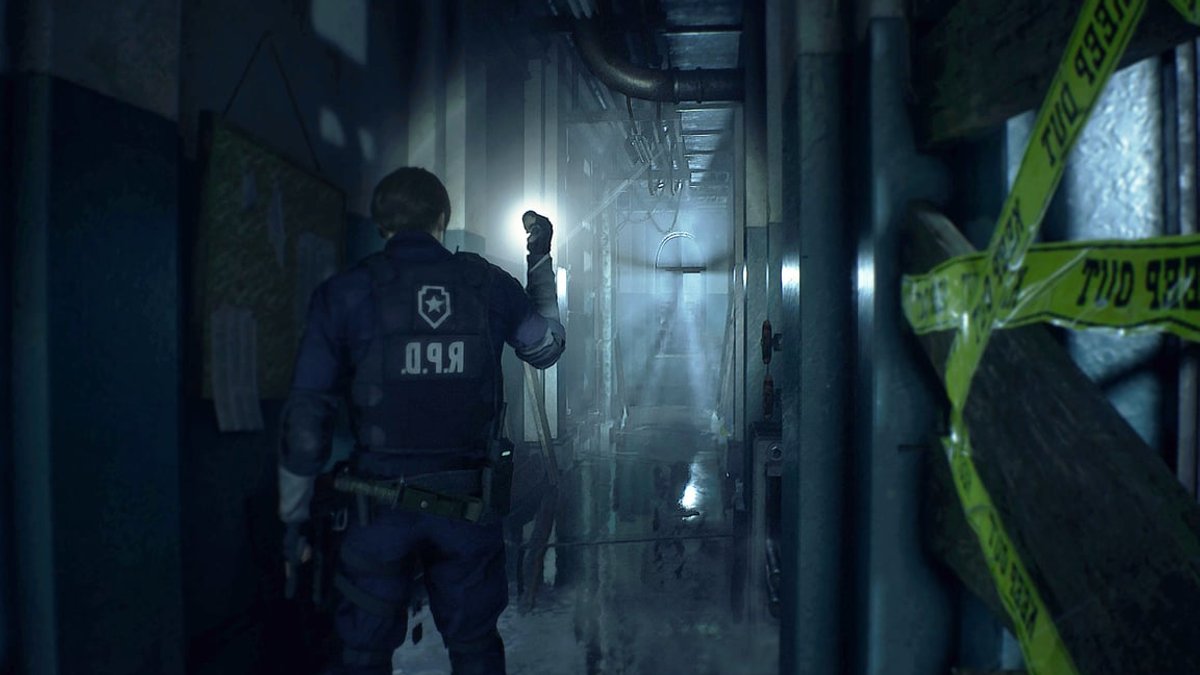
Resident Evil 2 remains one of the most acclaimed survival horror games ever made, and its enduring appeal traces back not to cutting-edge graphics but to deliberate design choices that prioritized atmosphere over realism.
Lo-Fi Design Creates Lasting Fear
A survival horror game with a supernaturally long lifespan, Resident Evil 2 demonstrates how fidelity can undermine fear. Modern remakes may render characters like Leon Kennedy with remarkable detail, but the original 1998 version relied on polygonal scarcity and pre-rendered backgrounds to build tension. The fixed camera angles, awkward perspectives, and slow door-opening cutscenes weren’t technical limitations—they were tools that forced players to imagine threats lurking beyond what they could see. The disquieting camera angles never gave players a clear view down corridors or into alleyways, maintaining a constant and nerve-wracking sense of anticipation.
The Capcom team behind the original title acted more like impressionist painters than virtual architects. By offering just enough visual information, they invited players to fill in the blanks with their own fears. This minimalist approach created an indelible sense of place in the fictional town of Raccoon City, where a biochemical weapon released by the Umbrella Corporation had turned residents into zombies. The scarcity of polygons and limited sound samples, constrained by physical disc storage, became strengths rather than limitations.
The best stories from Resident Evil 2 aren’t found in exposition but in personal anecdotes—like the first encounter with The Licker, arguably the most frightening assembly of polygons the original PlayStation ever rendered. That window in Raccoon City PD headquarters, which you walked past without incident the first time before an arm reached out to grab you the second time, sending your PS1 pad ceiling-wards, exemplifies how the game mastered moment-to-moment terrorizing through lack of fidelity.
Read Also: Ceer Motors debuts first electric sedan and SUV
Two Campaigns, Endless Replayability
The game follows two protagonists: Leon Kennedy, a rookie police officer on his first day, and Claire Redfield, a college student searching for her brother Chris. Their paths intersect through stilted dialogue and shared objectives, but each character’s campaign offers a distinct narrative experience influenced by player choice. Who you select to play as first affects story details and hidden elements discovered during multiple playthroughs.
Rain-soaked corridors and eerily quiet rooms contain secrets that reward patience. The RCPD headquarters features puzzles requiring players to manipulate antique busts and align gemstones with sunlight, a design decision that feels organic to the setting rather than arbitrary. These mechanics enhance immersion instead of interrupting it with modern conveniences like digital file searches. The decision to use such unconventional puzzle mechanics was lost to time, but it contributed significantly to the game’s mysterious atmosphere.
There are secrets lurking in those rainy streets and eerily quiet corridors, revealed only through the multiple playthroughs needed to see everything. Claire and Leon’s experiences have some crossover but are also affected by player decisions, adding narrative subtlety and complexity to what could have been a straightforward survival horror experience.
Combat Feels Dangerous, Not Heroic
Despite being a zombie game, combat rarely feels satisfying. Clunky controls, disorienting camera work, and scarce ammunition make encounters feel desperate rather than empowering. Facing groups of undead often results in resource depletion and unexpected damage, leaving players feeling vulnerable rather than heroic. This intentional imbalance reinforces the core premise: you’re not an action star, you’re prey.
Read Also: Mercedes-Benz Confirms New GLC 400 BEV for India
Zombies don’t simply fall down after taking damage; they persist relentlessly, turning every confrontation into a tense calculation of risk versus reward. The awkwardness of movement and aiming adds layers of stress that high-fidelity shooters typically eliminate. An encounter with a group of zombies becomes something you muddle through, spending more resources than hoped and taking more damage than anticipated.
Legacy Lives On Through Remake
Capcom revisited Resident Evil 2 in 2019 with a full remake that modernized visuals while preserving key atmospheric elements. The updated version presents familiar locations with enhanced lighting and smoother gameplay mechanics.
The 2019 version plays like a totally different game, one that feels good to shoot zombies in, but still somehow manages to feel quintessentially the same experience.
You can stumble your way through the whole thing in six hours if you’re determined enough, and many people did, 28 years ago. Its continued relevance across decades reflects exceptional craftsmanship in blending narrative depth with mechanical tension. Whether experienced through aged PlayStation hardware or contemporary platforms, Resident Evil 2 endures because it understands that true terror comes not from what you see; but from what you fear might be hiding in the shadows.


